LUCSA Leadership Embarks on Pastoral Solidarity Visit to Mozambique Amid Ongoing Instability
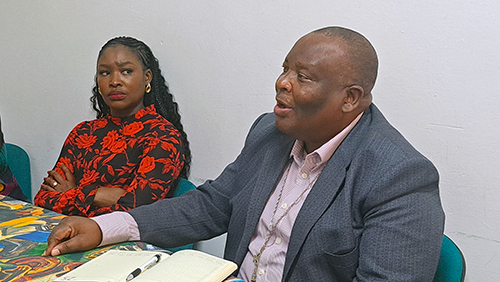
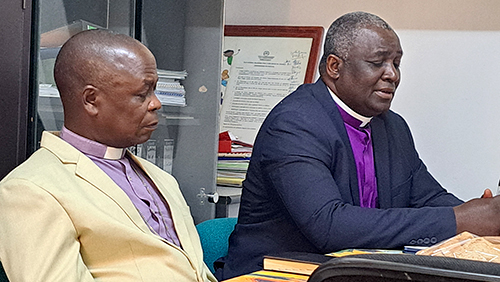
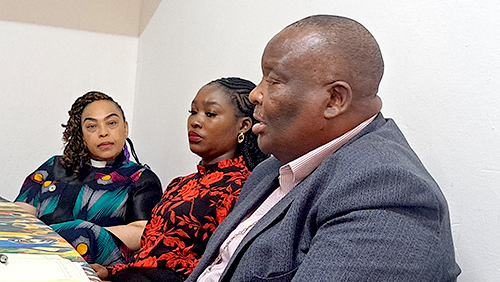
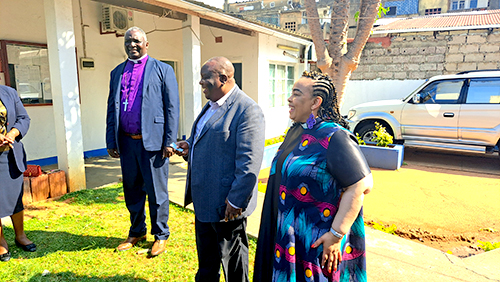
In a powerful expression of regional solidarity, the President of the Lutheran Communion in Southern Africa (LUCSA), Bishop Kenneth Sibanda, and the Executive Director, Rev. Lilana Kasper, are currently on a pastoral visit to Mozambique following recent episodes of unrest that have disrupted the country’s stability and security.
The LUCSA delegation is accompanied by Bishop Matsimbe and was warmly received by the Christian Council of Mozambique (CCM), which is led by General Secretary Rev. Joko Damião Elias. The visit affirms LUCSA’s ongoing commitment to peacebuilding, accompaniment, and support for its member churches during times of crisis.
As part of national efforts to respond to the unrest, a country-wide prayer day is scheduled for 28 August. The event, organised by the Christian Council of Mozambique and endorsed by the government, will bring together citizens and faith communities to pray for peace, healing, and unity. The government’s support of this initiative demonstrates a shared resolve to promote national reconciliation and social cohesion.
During the visit, Rev. Elias expressed his deep gratitude to LUCSA for its solidarity and timely presence, describing it as a source of encouragement to the churches and communities navigating the current challenges.
Regional leaders recently gathered in Zambia, where it was acknowledged that the instability in Mozambique has far-reaching consequences beyond its borders. The region’s economic development and trade depend heavily on Mozambique’s stability. Therefore, there is an urgent need for neighbouring countries and church bodies to support Mozambique in restoring peace and sustainable development.
Bishop Sibanda commended the leadership of the Christian Council of Mozambique for their courageous role in uniting churches and communities during this difficult time. He praised them for being “the salt that preserved peace” and reminded all present of the prophetic role the church must continue to play in shaping a just and peaceful society.
Despite the momentum toward peace, serious challenges persist in the northern regions of Mozambique, where terrorist activity continues to threaten the safety of communities. These areas—rich in natural resources—remain vulnerable to external interference and exploitation.
Rev. Kasper highlighted the urgent need to respond to the plight of young people in the country. “The youth remain vulnerable and at risk of being manipulated by those who seek to benefit from their desperation,” he said. He emphasized the shared responsibility of both the church and government to confront youth unemployment and social marginalisation, noting that failure to do so leaves a dangerous gap easily filled by extremist influence.
The Christian Council of Mozambique is currently developing programmes aimed at creating employment opportunities for youth, with a focus on restoring hope, stability, and long-term economic inclusion.
LUCSA reaffirms its commitment to standing with Mozambique in prayer, action, and accompaniment—and encourages its member churches across Southern Africa to join in supporting efforts toward peace, healing, and transformation.