

• Who we are
      • Vision Mission and Values
      • Governance Structure
      • Secretariat Office
    • What we do
      • Mission and Diakonia Programmes
      • Christian Education
      • Gender Justice
      • Migrants and Refugees
      • Bursary
      • InfoHut
      • Justice and Reconciliation
      • HIV/AIDS
    • Member Churches
      • Bishops
      • Evangelical Lutheran Church in Angola (IELA)
      • Evangelical Lutheran Church in the Republic of Namibia (ELCRN)
      • Evangelical Lutheran Church in Southern Africa (ELCSA)
      • ELCSA – Cape Church
      • Northeastern Evangelical Lutheran Church in South Africa (NELCSA)
      • Moravian Church in South Africa (MCSA)
      • Lutheran Church in Southern Africa (LCSA)
      • Evangelical Lutheran Church in Zambia (ELCZa)
      • Evangelical Lutheran Church in Malawi (ELCM)
      • Evangelical Lutheran Church in Zimbabwe (ELCZ)
      • Lutheran Evangelical Church in Africa (LECA)
      • Evangelical Lutheran Church in Mozambique (IELM)
      • Evangelical Lutheran Church in Namibia (ELCIN)
      • German Evangelical Lutheran Church (GELC)
      • Evangelical Lutheran Church in Botswana (ELCB)
    • News and Updates
      • Events
    • Resources
    • Timeline
LUCSA
LUCSA
  • Who we are
    • Vision Mission and Values
    • Governance Structure
    • Secretariat Office
  • What we do
    • Mission and Diakonia Programmes
    • Christian Education
    • Gender Justice
    • Migrants and Refugees
    • Bursary
    • InfoHut
    • Justice and Reconciliation
    • HIV/AIDS
  • Member Churches
    • Bishops
    • Evangelical Lutheran Church in Angola (IELA)
    • Evangelical Lutheran Church in the Republic of Namibia (ELCRN)
    • Evangelical Lutheran Church in Southern Africa (ELCSA)
    • ELCSA – Cape Church
    • Northeastern Evangelical Lutheran Church in South Africa (NELCSA)
    • Moravian Church in South Africa (MCSA)
    • Lutheran Church in Southern Africa (LCSA)
    • Evangelical Lutheran Church in Zambia (ELCZa)
    • Evangelical Lutheran Church in Malawi (ELCM)
    • Evangelical Lutheran Church in Zimbabwe (ELCZ)
    • Lutheran Evangelical Church in Africa (LECA)
    • Evangelical Lutheran Church in Mozambique (IELM)
    • Evangelical Lutheran Church in Namibia (ELCIN)
    • German Evangelical Lutheran Church (GELC)
    • Evangelical Lutheran Church in Botswana (ELCB)
  • News and Updates
    • Events
  • Resources
  • Timeline
  • June 10, 2021
  • lucsa_admin
    • Gender Violence
  • 0

Thursday in black has its roots in the 1970s and 1980s Argentinian movement “mothers of the Plaza de Mayo”, referring to mothers who protested against the policy of having dissidents “disappearing” (a term used to describe people killed during political violence). These mothers assembled in the Plazo de Mayo in Buenos Aires every Thursday to register their protest with the authorities.

In 1980s it was then when the World Council of Churches (WCC) formed a Thursday in Black peaceful protest against rape and violence, especially that which takes place during wars and conflicts. The campaign was revived, largely as a social media initiative, by the WCC in 2013. We encourage our member Churches to support the campaign.

Source: Thursdaysinblack.co.za

Colleen Cunningham LUCSA WICAS (Women In Church And Society) Regional Co-ordinator.
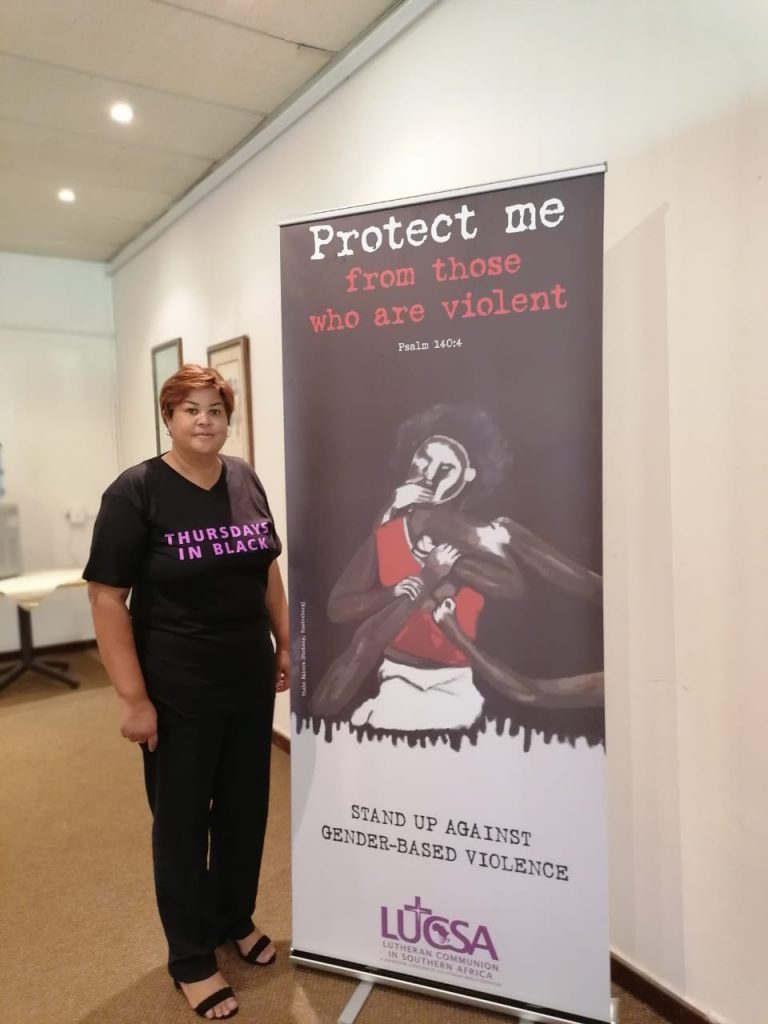
Colleen Cunningham LUCSA WICAS (Women In Church And Society) Regional Co-ordinator.
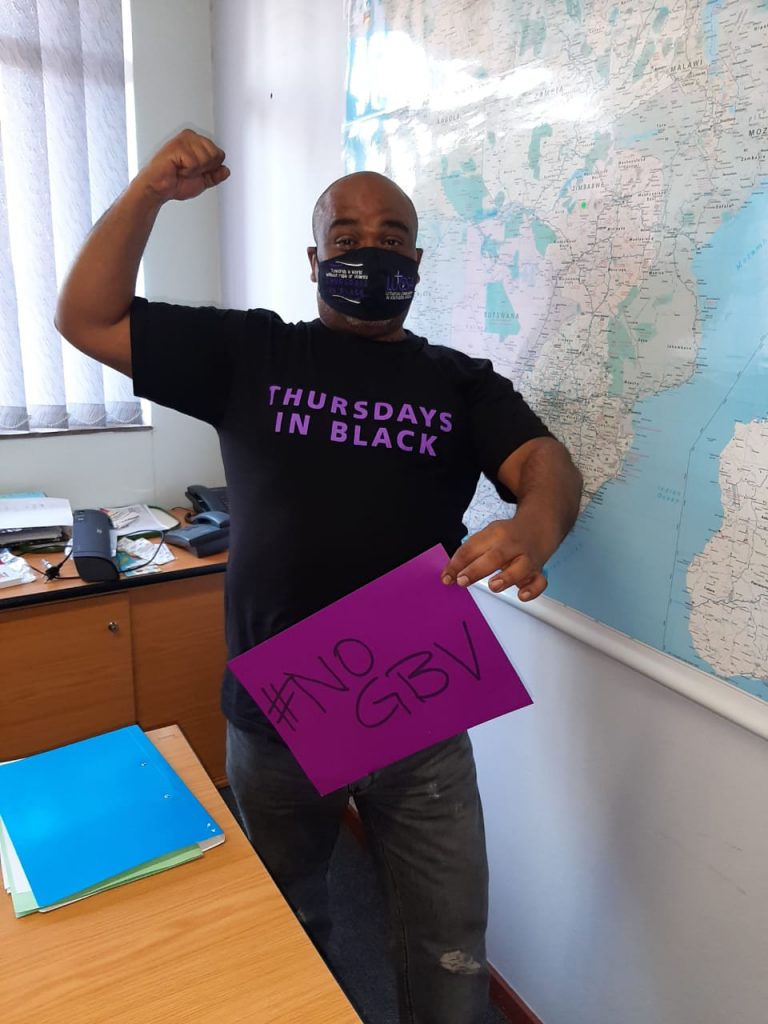
Do not shy away report violence. No to Homophobia, No to GBV. Violence is NEVER Justifiable.” Denver Grauman PA to the Executive Director/LUCSA Administrator 

Facebook
fb-share-icon

  • Previous The Youth in Leadership Commemorating the class of 1976 Soweto Uprising
  • Next LUCSA MEMBER CHURCHES GENERAL SECRETARIES’ CONSULTATION WORKSHOP
  • Faith Leaders Call for a Jubilee of Hope: Debt Justice at the Heart of South Africa’s G20 Year

  • LUCSA Leadership Embarks on Pastoral Solidarity Visit to Mozambique Amid Ongoing Instability

  • Churches Called to Cut the Cycle of Violence

© 2026 All Rights Reserved. Designed by Amava Technologies