Shepherds of Our Communion: A Closer Look at LUCSA’s Bishops
Bishop’s Profile:
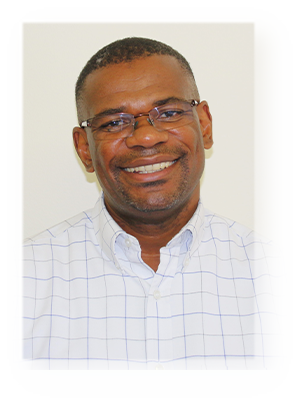
Name and Title: Mr. Lizwi Mtumtum, President of Moravian Church in South Africa
Personal Background:
- Family details (e.g., spouse, children)
Married to Ncumisa, with three (3) children – two girls (Zimkhitha, 30 and Lukhanyo, 22) and one son (Lathi-tha, 18). - Educational background and significant achievements or titles only.
BA in Economics & Accounting (Summa Cum Laude, Tougaloo College, Mississippi, USA)
Property Development Programme Certificate, UCT Business School, Cape Town
Ex-Investment Banker & former director of listed companies
Tenure:
- Date of ordination and duration in the current position
Lay leader and former investment banker with local & international investment banks (not a theologian)
Former MCSA Vice President (Finance & Property): 2021 – 2024
MCSA President: 2024 – date
LUCSA:- Officer: 2022 – date
- SCOFA Chairperson: 2022 – date
Vision and Mission:
- A personal statement outlining the Bishop’s vision and mission for their church.
Build the financial sustainability of the MCSA and ensure that the MCSA goes back to its mission work and help address issues of common concern within society (poverty, inequality, GBVF, etc). “The Son of Man (Jesus Christ) did not come to be served, but to serve and give his life as a ransom for many.” Matthew 20: 28 – From this the Church and therefore MCSA receives its mission and its power of service, to which each of our members is called.
Church Overview:
Name of the Church: Moravian Church in South Africa (MCSA)
Establishment Details:
- Date and circumstances of establishment.
The MCSA traces its roots back to 1737 when Georg Schmidt arrived at the Cape and began his mission amongst the Khoi and San people in Genadendal (previously known as Baviaanskloof) where he settled. Despite facing adversity and eventual deportation in 1743, Georg Schmidt’s work laid the foundation for what is now a vibrant denomination, which also played a significant role in the development of our beloved country, South Africa.
Geandendal stands as a testament to the enduring mission of the church and the power of education, which further led to the growth of the church in the Eastern Cape, Northern Cape, KwaZulu-Natal and Gauteng regions of South Africa.
Demographics:
- Number of congregations within the region/country.
To date, the MCSA comprises 88 congregations, many outstations and preaching places. - Total membership count.
Although we are busy updating our official database, we estimate membership to currently stand at circa 42 000 members (106 000 communicants) - Geographical distribution and key locations.
The MCSA is divided into 10 districts, which comprises:
Western Cape (4 districts)
Eastern Cape (5 districts)
Gauteng (1 district)
Leadership Structure:
- Number of pastors and junior bishops.
We have thirty seven (37) full time ministers and 21 part-time ministers serving our congregations. We also make use of retired ministers who are given yearly contracts and serve congregations on a part-time basis.
The MCSA has three (3) bishops in service (two full time and one part time) and five (5) emeritus bishops.
In our congregational ministry, we make use of acolytes, who are lay people, to lead congregations and provide pastoral assistance to the minister. Acolytes serve for an inter-synodal period (normally 4 years in between Synods) and are elected by a congregation. Normally acolytes can only serve for two terms and retire for a term, before they are considered for election again. Some acolytes are paid a stipend, in cases where they serve a main congregation with no minister.
Furthermore, the spouse of the minister is normally inducted into the office of the acolyte, after he/she accepts the call – meaning it’s not automatic. The Spousal Acolyte (as they are normally referred) assist the minister in her / his pastoral duties, including the sacraments. - Overview of administrative hierarchy.
The MCSA is a Province of the Unitas Fratrum (the Moravian Church Worldwide) and forms part of the Africa Region of the Unitas Fratrum, with DR Congo, Malawi, Tanzania and Zambia. - In the South Africa Province, MCSA is governed as follows:
- Provincial Synod, the highest decision-making body (which sits every 4 years);
- Provincial Board, with some of its powers delegated by the Provincial Synod and manages the church during the inter-synodal period. The Provincial Board is made up of the three executives elected at the Provincial Synod (President, Vice President (Finance & Property), and Vice President (Matatiele – regional office), the Finance Director (with no voting powers), and ten (10) district representatives, elected at District Conferences;
- District Councils – each of the 10 districts has a district council, which manages the congregations in its area. The District Council is made up of ministers, acolytes and elected representatives from each congregation; and
- Church Councils – each church council is made up of the local minister, acolyte and elected congregational representatives.
For the Moravian Church, the administrative head of the church is the President. The Bishops are pastors of the pastors and are therefore not involved in administrative matters but are to be consulted by the Provincial Board on doctrine and practice, and on ministerial and personnel matters.
Headquarters:
- Location and contact information of the head office.
63 Albert Road, Lansdowne, Cape Town
Tel: +27 (0)21 761 4030
E-mail: admin@moravianchurch.org.za
President: Br. LX Mtumtum
Mob: +27 (0)79 929 6563
Contact Information:
Bishop’s Contact Details:
- Bishop SNN Ngqakayi
Tel: +27 (0)82 880 7544
E-mail: ngqakayi@gmail.com - Bishop RA Petrus
Tel: +27 (0)65 672 6070
Email: rochellepetrus85@gmsil.com - Bishop JA Slamat
Tel: +27 (0)84 901 9088
Email: jaslamat@sun.zac.za
Additional Sections:
Notable Programs and Initiatives:
- Highlight significant programs or outreach initiatives led by the church.
- Elim Home – care for disabled children
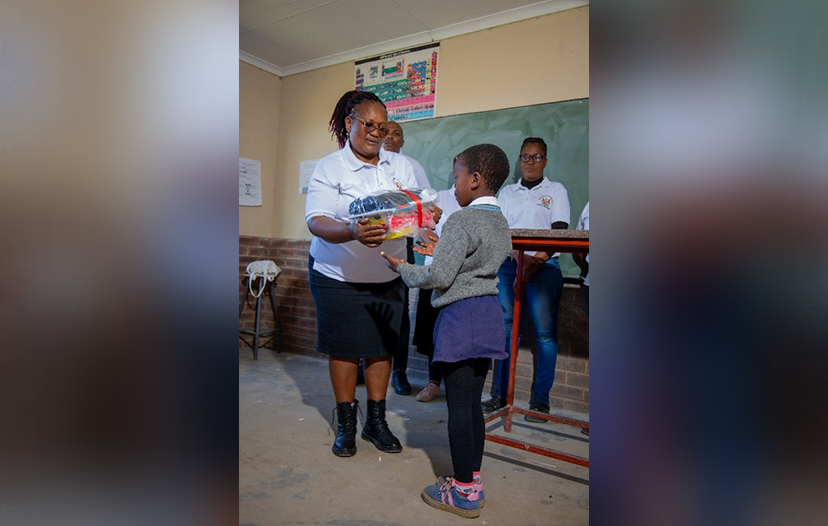
Elim Home is a mental health facility, rendering a 24-hour residential care for Severely and Profoundly, Intellectually and Physically disabled children and adults. The home is situated in the most southern rural area of the Africa continent. It provides nursing care to 50 children with severe and profound intellectual and physical disabilities.
Elim Home is also an employer to over 50 staff members, the majority of whom are women who are breadwinners for their families. - Masangane – HIV/AIDS Programme
Masangane was founded in 1999 as an orphan care program, when it was seen that number of parents were dying due to sicknesses related to HIV and AIDS. A treatment program was added in 2004, funded by Vesper Society of America. In 2005 HIV Counselling and Testing was also started, as a result of findings after conducting HIV awareness programs in different villages surrounding Matatiele. It was found that people were reluctant to attend clinics and hospital, as stigma and discrimination were playing a huge role by then.
Home-based care was the engine of the project from the onset as patients needed support and information on how to take their medication because the first medication had major side effects. We chose home-based care programme because Masangane is a charity organisation, which is depending on donations for its implementation of the activities. The project is situated in Matatiele, Eastern Cape and serves the villages in the surrounding areas. Home-based care workers are identified and work in their respective residential areas, which makes it easier for them to conduct home visits. They serve people that they know and there is no travelling cost that is required for them to deliver services, and they only submit their reports in the office on a weekly basis.
To date, most of the funding is linked to projects and is provided by the Department of Health, and the Evangelical Mission in Solidarity, amongst other major funders. - Anti-GBVF Programme
The Moravian Church in South Africa (MCSA) is deeply committed to living out its faith in response to the real challenges facing society today. One of the most pressing of these challenges is Gender-Based Violence and Femicide (GBVF), which has reached crisis levels in South Africa. GBVF devastates lives, families, and communities, and the church acknowledges both its responsibility and its calling to be part of the solution.
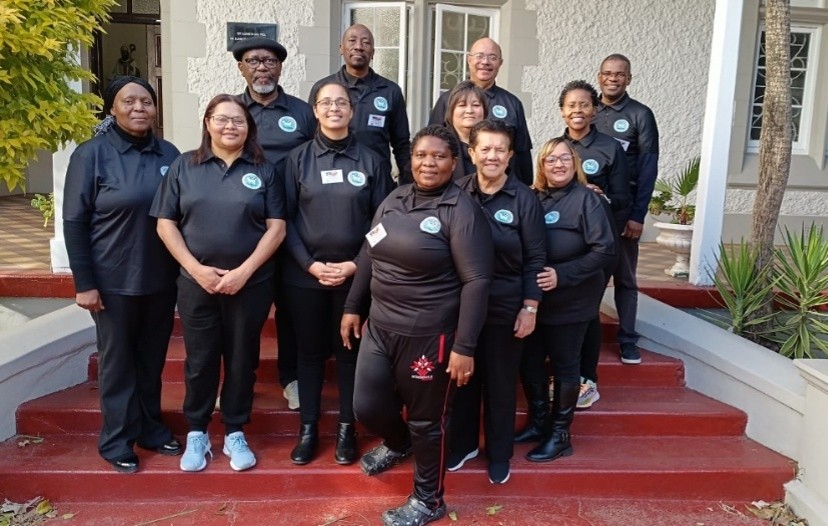
To address this scourge, the church has developed a Gender-Based Violence and Femicide Policy, drawn up by the Anti-GBVF ambassadors in partnership with the Sexual Harassment Policy of the church. The policy seeks to provide direction for the entire MCSA by:- Educating and conscientizing members and leaders about the realities of GBVF.
- Training and building capacity for prevention, response, and support.
- Promoting spiritual, moral, and emotional well-being in families and communities.
- Creating safe spaces within all church structures where dignity and justice are upheld.
- To ensure effective implementation, the church established the Anti-GBVF Steering Committee. This body is tasked with driving awareness programs, educational initiatives, pastoral care, ministerial training, and accountability measures across the denomination. The committee also coordinates resources and ensures the church becomes a consistent and visible presence in the fight against GBVF.
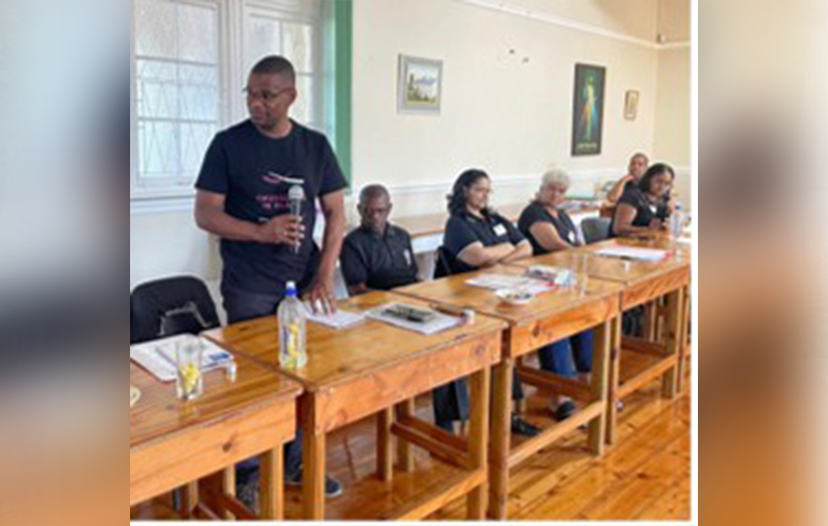
A major initiative spearheaded by the committee is the Train-the-Trainer program. Through this, representatives from each district are equipped with knowledge, skills, and practical resources to return to their local contexts and lead training sessions, awareness campaigns, and healing initiatives. This cascading approach ensures that anti-GBVF work is not confined to the national level but reaches every congregation and community, creating a sustainable movement for change throughout the MCSA.
To date, most of the funding is provided by Evangelical Mission in Solidarity (majority funder) and LUCSA. - Youth Desk
Many of our young people are either school leavers with matric (high school graduates) and/or have some tertiary education (either completed or not), and are mostly unemployed. They are thus faced with daily struggles of economic non-involvement, develop mental issues (depression, etc) and others even succumb to drug use and/or alcohol abuse.
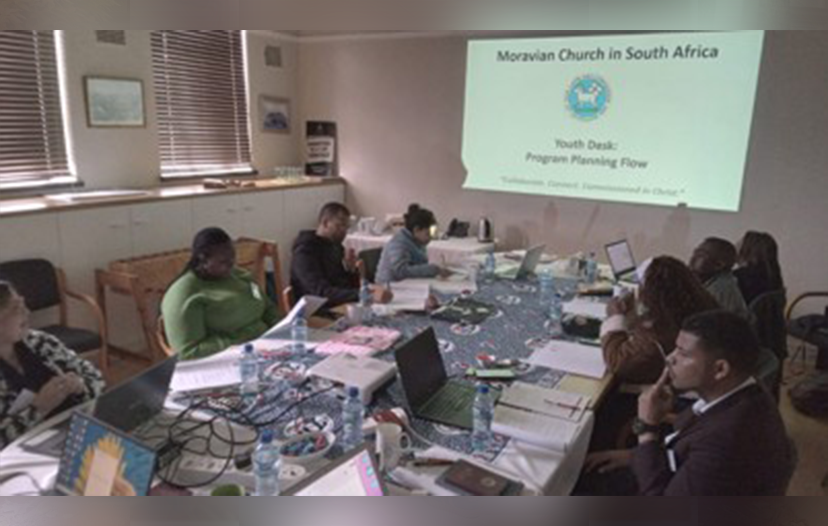
The 8th Provincial Synod of 2021 resolved that there should be dedicated persons in each district who will be tasked with Youth Ministry.
A Youth Work / Ministry Desk has been setup at Head Office under the co-leadership of the PB Executive (assigned with EMS Portfolio) with ultimate responsibility of the project, but assisted by the PB Member (assigned with Youth Portfolio). The Youth Desk has appointed four (4) Program Co-ordinators who will design and roll-out specific programs covering:- Theology: how to minister to young people, including forms and methods of delivery of theological messages to them, type of worship services to offer, harness and direct those interested in pursuing theological studies. This will be based on the outcomes of the work done by the Provincial Youth Ministry Task Team (PYMTT) setup by the Provnicial Board to address the 2021 Synod Resolution referred to above. We expect to receive the report of the PYMTT at the next Provincial Board meeting in April this year. The Moravian Theological Centre (MTC) will be approached to provide guidance in developing programmes that will provide spiritual nourishment for youth at congregational / district / national level. These programmes can be run jointly with MTC, where appropriate.
- Societal challenges: how to assist them with challenges like drung use, al;cohol abuse, sexual health issues (incl. teenage prengancies and associated STIs), LGBTQI+ issues and how to bring thatb debate into the church space, mental health issues (incl. depression, suicidal thoughts, etc). It is envisaged that this could grow over time to benefit young people in the local communities within which our congregations are based, thus making our church more relevant and being true to its Mission and Evangilsm responsibility
- Economic involvement: provide career guidance to them at high school level, advice on career opportunities, advice on CV preparation and coaching for job interviews, advice on self-employment opportunities and available funding for Small & Medium Enterprises. Some of the economic activity projects can be run by these young people for and/or in conjunction with MCSA as the church has vast land to implement projects such as food gardens or fully fledged agricultural projects with funding from insitutions like LWF and/or government insitutions or other international FDIs
- Environment / Ecological issues: most of ouir young people are environmentally conscious and need assistance to live-out their passion. our church admittedly has not made great strides in protecting God’s creation. The co-ordinator assigned this task would need to be passionate about environmental issues, and link up with other ecomenical bodies to design our church’s response to this big challenge.
- 2) 3 Zonal Co-ordinators have also been appointed to facilitate the above programmes / projects in the following zones:
- a) Central Zone covering Gauteng, Matatiele/Natal and Mt Fletcher districts
b) Eastern Cape Zone covering Algoa/Tistsikamma and Mthatha districts
c) Western Cape Zone covering Cape Town, Cape Town South, Overberg and West Coast districts
- a) Central Zone covering Gauteng, Matatiele/Natal and Mt Fletcher districts
- 3) At least 1 District Volunteer will be required to assist the above Zonal Co-ordinaters to deliver and implement the various programmes outlined above. The district volunteers will be assisted with stipend to cover some of their local / district transport and telecomms (airtime/data).
Community Impact
- See attached case study – GBVF in Mt Fletcher, Eastern Cape
Photo Gallery: Images from church events, services, and community activities. Maximum 3 photos